Mark your calendars for this year's Cambridge Science Festival 2014 which is Friday, April 18, to Sunday April 27. This is only a selected list of what you'll find there, many being physics-related. Check out their website to find out about ALL their offerings. It's a great activity for the whole family! And it's free, except where noted. For example, for some Science Museum events you need to pay museum admission. Ask at your library if passes are available for that day. You can book up to two weeks in advance (earlier is recommended).
For easier reading of this list, every other event is in bold face.
MY CAMBRIDGE SCIENCE FESTIVAL 2014
RECOMMENDATIONS
Friday,
April 18
Are you curious about sound and music? We welcome all ages to learn, sing, move and explore the science of sound in this lively, interactive performance. The performance invites audience participation in multiple ways: audience members are invited to sing along to songs including "I'm a Body Symphony," "Wonderful Things About Strings" and "No Matter How you Twist it, It's Still a Horn." Audience members participate through demos, question and answer, sing-alongs and "move-alongs" that help demonstrate the science of sound. Cost: Free with museum admission
Saturday, April 19
SCIENCE CARNIVAL & ROBOT ZOO 12 noon – 4:00 p.m.
(see separate posting)
Boston
Marathon Activities 9:00am -
5:00pm Museum of Science
Cost:
Included with Museum Admission
Amazing Nano Brothers
Juggling Show 12 noon - 12:20pm
& 2 pm - 2:20pm Museum of Science, Cahners Theater, Blue Wing Level 1
Sunday,
April 20
How
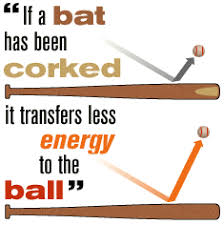
does a curveball curve? Does a fastball actually rise? Who is Carmine and what the heck is
sabermetrics? Learn about the Science
of Baseball while enjoying the Red Sox vs. Orioles game at Fenway. Order your tickets through
www.redsox.com/sciencefestival, and a portion of the proceeds will go to
support the Cambridge Science Festival!
Everyone wins!!
Cost: Free
with ticket to Red Sox game, purchase at www.redsox.com/sciencefestival

Monday,
April 21
Starts in front of Museum of Science. Tour of Boston's bridges along the Fort
Point Channel, surface tour of the Central Artery Tunnel along the Rose Kennedy
Greenway, and tour of Zakim Bridge & Park given by bridge experts from the
Boston Society of Civil Engineers (BSCES).
The BSCES runs tours like this all year long
for students to help them recognize how their classes relate to the real world
and to help them gain appreciation for their infra-structure. Visit www.engineeryourfuture.org for info on the whole outreach program.
Tuesday,
April 22
SciEx: Extreme Science Original Video Contest 7:00pm - 9:00pm
MIT
Museum, 265 Massachusetts Ave., Cambridge
Ever seen a short science video as
exciting as an extreme sports video? Now’s your chance! Join MIT graduate
students and choose your favorite original extreme science video. Popcorn included!
Biotechnology & Compliance Laboratory Tours & Open
House 1:30pm - 3:30pm Biotechnology &
Compliance Laboratory, Saville Hall, 24 Saville Ave, Quincy College
Wondering about an
entry-level career in Massachusetts' booming biomanufacturing industry, but
don't know where to start? Get an insider's view of Quincy College's new $3
million state-of-the-art Biotechnology and Compliance Laboratory
from Bruce Van Dyke, Chair of Biotechnology & Compliance, and see
demos of cutting edge technology.
Wednesday, April 23
Across
MIT MIT Campus,
Cambridge 9:30 a.m. to 8:30 p.m.
Take a journey across MIT to discover current research,
student projects, collections and more...Such as: MIT Museum
- Solar car shop tour – Science trivia challenge – etc.
Everything You Wanted
to Know About Slide Rules 1:00pm
- 2:00pm
MIT Museum, 265 Massachusetts Ave.,
Cambridge
Cambridge
Community Center, 5 Callender St, Cambridge
Thursday, April 24
MIT
Museum, 265 Massachusetts Ave., Cambridge
Friday,
April 25
The Science of Jello
11:00am - 12:00pm, 1:00pm - 2:00pm, &
3:00pm - 4:00pm (3 sessions)
MIT Museum, 265 Massachusetts Ave., Cambridge
Students experiment with light and perception to investigate the
basic principles behind real-world holography. Through a series of
demonstrations and hands-on activities, students will learn how holograms are
made and viewed. The properties and behavior of light waves will also be
discussed, from reflection to diffraction and interference. This workshop
includes a guided tour of the Museum's holography gallery. Note: Limited to 25 participants per
session. Ages 12+
Cost: $10 per participant, includes Museum admission. Pre-registration and
advance payment required at: http://bit.ly/CSF2014
MIT Museum, 265 Massachusetts Ave.,
Cambridge
The MIT Museum invites you to
explore our exhibit halls with a special Cambridge Science Festival guide! Seth
Riskin, Manager of Holography and Spatial Imaging, offers new perspectives on
the Museum’s popular holography collection. Note: Limited to 25 participants - teens and adults only. Tickets available one half-hour before tour start on a first-come, first-served basis. Cost: Free with Museum admission
Deguglielmo
Plaza in front of 27 Brattle St., Harvard Square, Cambridge
Saturday, April 26
SciFest Block Party 12:00pm - 4:00pm Tyler Street, Somerville
Selected list:
Brooklyn Boulders (BKB) is a 40,000 sq. ft. rock climbing and fitness facility
that offers a new type of community space that blends state-of-the-art climbing
terrain with art, culture, music, and entrepreneurship. Tours available every
half hour starting at 12:00pm. Half-price admission for climbing all day. All
BKBS guests must sign a waiver to gain entry into the facility. To avoid a
line, we ask that all guests fill out our waiver ahead of time online here.
AirCraft Aerial Arts is Greater Boston’s home for aerial arts and circus fitness. AirCraft offers classes and private training on aerial silks, trapeze, lyra/hoop, corde lisse, hammock and more, as well as classes in flexibility and conditioning. Beginners and experienced aerialists welcome! AirCraft Aerial Arts demonstrations and workshops are repeated at 1pm, 2pm, and 3pm.
AirCraft Aerial Arts is Greater Boston’s home for aerial arts and circus fitness. AirCraft offers classes and private training on aerial silks, trapeze, lyra/hoop, corde lisse, hammock and more, as well as classes in flexibility and conditioning. Beginners and experienced aerialists welcome! AirCraft Aerial Arts demonstrations and workshops are repeated at 1pm, 2pm, and 3pm.
40 Prospect Street, Cambridge
Cost: Tickets available at improvboston.com and at the door | The Family Show often sells out--advanced
purchase recommended.
Sunday,
April 27
 laser beams
laser beams
Topics in Optics 10:00am - 1:00pm
MIT Museum, 265 Massachusetts Ave.,
Cambridge
Cambridge
Public Library, Community Room, 449 Broadway, Cambridge
Cost: $2, pre-register at: http://csfdodecahedron.eventbrite.com/
"SILA" a play about environmental issues in the
North, Baffin Bay
by Chantal Bilodeau, director Megan Sandberg-Zakian April 24 - May 25
World Premiere Produced by Underground Railway Theater
A Catalyst Collaborative@MIT project
by Chantal Bilodeau, director Megan Sandberg-Zakian April 24 - May 25
World Premiere Produced by Underground Railway Theater
A Catalyst Collaborative@MIT project
