Sunday, April 28, 2019

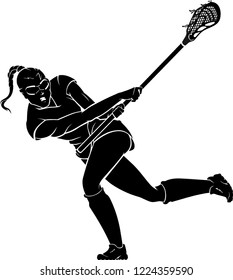
Lacrosse Physics, illustrated introduction


PHYSICS of LACROSSE
An Introduction

Lacrosse player producing torque --
a turning force, just as you produce torque when hula hooping.

                    Image result for black and white drawing, hula hoop turning


                      Your energy overcomes the force of gravity.
           Image result for black and white drawing, swing at lacrosse ball                  


Trajectory of any ball:  forms the shape of an arc --
this is the trajectory of a ball in motion
                            Vector illustration of the logo for basketball, consisting of flying on a trajectory basketball ball, thrown exactly in the ring with net; target hit


Lacrosse ball at the end of its trajectory -- ready to be caught!


SIMPLE MACHINES in LACROSSE:  LEVERS

Your arm works as a lever --

                                                     Image result for black and white drawings, arm as a lever
You have a longer lever when you hold a lacrosse stick.


                 Image result for black and white drawings, arm as a lever

In this picture the shovel acts as a lever, too -- 
just as a lacrosse stick is a lever.


Wednesday, April 24, 2019

Article in Patriot Ledger about the 5th science festival

THIS ARTICLE WAS PUBLISHED BY THE PATRIOT LEDGER FOLLOWING THE  5TH SCIENCE FESTIVAL.  PLEASE CLINK ON THE LINK TO VIEW IT, INCLUDES PHOTOS AND VIDEO FOOTAGE.

Celebrating STEM at the South Shore Science Festival


https://www.patriotledger.com/news/20190413/celebrating-stem-at-south-shore-science-festival

Boston Globe article announcing 5th science festival

this was an article to announce the upcoming science festival by the boston globe.  please click on the link underneath for the article.

QUINCY

South Shore Science Festival is a chance to experiment

Participants at last year's South Shore Science Festival created buildings out of different materials, including blocks and Legos.

Monday, March 25, 2019

SCIENCE FESTIVAL V - Sat., April 13, 2019

Happy to announce:
This year's South Shore Science Festival V will be Saturday, April 13, 2019 from 10 a.m. to 3 p.m. at 180 Old Colony Avenue, Quincy, at the Quincy Center for Innovation.  We're a member of MIT's Cambridge Science Festival.  www.southshorescience.org

Here are a few of the offerings that you can enjoy:

Boston Scientific games
Boston Cannons semi-pro lacrosse team of Quincy
Microsoft workshops
New England Garrison, 501st Legion Star Wars characters
Soil composting
Accordion workshop
Science through stories
Movies, videos
Jigsaw puzzles
Students and their science fair projects
Quincy Access TV
Clean with water treated with electrolysis and salt to change pH
Gateway to Science: Sports and Games
Scavenger hunt


Saturday, November 3, 2018

LEAFLET: SCIENCE OF SKIING


DID YOU KNOW THAT
YOU CAN LEARN PHYSICS
WHILE SKIING ?

This is about the science involved in downhill skiing.

Why is skiing on packed powder better than skiing right after a snowfall?
What things can I do to be sure of a nice smooth ride down the slope?

What kind of simple machine is a ski slope?

What is aerodynamics? And what does it have to do with skiing?


WHAT KIND OF FORCES ARE INVOLVED IN

 DOWNHILL SKIING?


Energy:  Potential energy at the top of the ski slope -- which changes to kinetic energy when you're in motion.

Gravity:  A force that pulls you to the earth, so it aids downhill motion.

Friction:  Friction occurs when 2 moving surfaces meet.  A lot of friction (rough, bumpy) makes motion harder; and a little friction (smoother) makes motion easier.

Aerodynamics:  Wearing smooth clothes and crouching help you to reduce friction between yourself and the air ››  less drag.  Your shape is more like a bird or a plane  (aerodynamic.)


NOTE

Center of mass, or center of gravity:

Bending your knees helps you find your center of balance.


WHAT KIND OF THINGS CAN I LOOK FOR 

 WHEN I HIT THE SLOPES?


First of all, that ski slope is actually a machine – what we call a simple machine. It's an inclined plane, just like a ramp is. It makes work easier. And if you had to ski down a hill that wasn't smooth, skiing would be harder. Wouldn't it?

After a fresh snowfall, the hill is not so smooth until the snow becomes packed. As you're standing at the top of the hill getting ready to push off, 
your position there gives you a lot of potential energy: the higher you are, the more you have.

Crouching down and pushing off -- kinetic energy of motion combined with the pull of gravity ….. along with a smooth surface and smooth skis -- means YOU will have an exciting ride down the hill!
\
 \
  \___ Whee !                           


REFERENCES:

Skiing: It's All About Friction

Marcia Howell, Univ. of Utah

NOTE: Univ. of Utah is a good resource for sport science 
in general.


NBCLearn.com and the National Science Foundation 
 did videos at the 2010 Winter Olympics on sport science, 
narrated by Lester Holt. See YouTube:     

http://www.nbclearn.com/portal/site/learn/cuecard/47275


Saturday, June 30, 2018

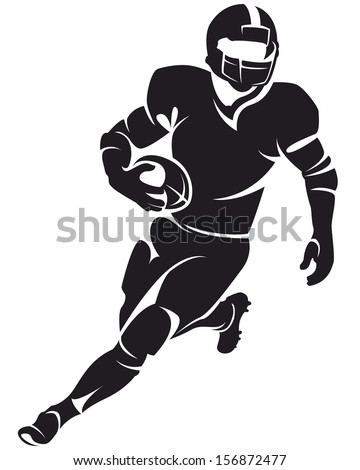
LEAFLET Football

front, outside, right of leaflet


DID YOU KNOW THAT
YOU CAN LEARN PHYSICS
THROUGH FOOTBALL?

Start to learn about some basic science involved in this game.
It looks at the following questions:

What are some examples in football of potential energy and kinetic energy?

What is 'collision' and what does it have to do with football?

http://sportscience-kathy.blogspot.com

GATEWAY TO SCIENCE:
SPORTS AND GAMES

Quincy, Mass.

inside, left
POTENTIAL ENERGY

and
KINETIC ENERGY

Potential energy is energy of position or place – where you are in the right place to do the job.

Kinetic energy is energy of motion – you are now in action.


QUESTIONS FOR YOU:
Where can you clearly observe potential energy & kinetic energy...

at the line of scrimmage?

when the quarterback is going to pass the ball?

... when the kicker is going for a point after touchdown?


inside, middle
WHAT IS COLLISION?

Collision is much more than an auto accident. 
 Collision happens whenever any two objects touch each other – 
whether it's a light touch or a hard touch. It ranges from:

elastic collision (with a lot of 'give') 
 …..............................to:..........................
inelastic (or non-elastic) collision (OUCH!, this has NO 'give'),

on a scale from 1 to 10 (see below).

Egg Toss (or Water Balloon) Contest: This is one example. 
If you throw the egg gently at close range, 
the catcher experiences elastic collision, say a 1.

On the other hand, if you throw the egg hard and at a distance, 
the egg might break (SPLAT!!) on the catcher; 
call this a 10 (completely non-elastic).

If, however, the catcher moves their hands back 
 (we call this 'giving with' the egg, or it has some 'give'), 
then it increases the distance and time – 
and may result in the egg not being broken. 
This moves it back toward the elastic range, 
and the collision might be a 7.


inside, right

WHAT DO WATER BALLOONS AND EGGS 
HAVE TO DO WITH FOOTBALL?
Playing a water balloon or egg toss game could be a good way to learn how to minimize injuries. First of all, minimizing injury is the reason that helmets and padding are worn. More than equipment is involved in protecting against injury, though.

Knowing how to fall is another way. If a player falls hard on the ground, injury may result. However, if he can roll – thereby extending the time and distance of impact – he is more likely to emerge unharmed.

You know the boxing term,
roll with the punches?
That's about collision!


outside, left
NOTES:


You could think of collision as
being on a scale from 1 to 10:

elastic 1 2 3 4 5 6 7 8 9 10 nonelastic

My scale may help you get the idea of collision.


_______________

Sports and games are the gateway to science, and YOU hold the key!


outside, center
Playing football...

is just one of endless ways to gain an understanding of physics and geometry. I hope this leaflet introduces you to seeing things you never saw before – or wondered about but just didn't know where to start.

Physics and geometry come into play in every activity and event going on around us.
Knowing how things work can add to your performance and to your fun. So give it a try. How?

  • Start with the information here
  • You may not understand everything in it right away, but for now, use what you do understand
  • Do an online search of your own
  • See what books or videos your library has
  • Share them with friends, your class, your team, your scout troop
  • Read my blog and tell others:
    sportscience-kathy.blogspot.com

Thank you! 

 Kathy Hogan


Sunday, June 10, 2018

LEAFLET: Playground Science

front:  outside, right

DID YOU KNOW THAT
YOU CAN LEARN PHYSICS
IN PLAYGROUNDS!

Start to learn about some basic science involved in
PLAYGROUND GAMES.

This leaflet looks at these questions:

What does gravity have to do with playgrounds?
Why do I see wood chips – or other soft material – on the ground?
How can I learn about potential energy and kinetic energy in a playground?

http://sportscience-kathy.blogspot.com

GATEWAY TO SCIENCE:
SPORTS AND GAMES
Quincy, Mass.


inside, left

RIDE THE SLIDE

When you decide to use the slide, you have a little WORK to do before you can enjoy the ride, right?
That WORK is you climbing up the stairs to the top of the slide.

You need to:
* Use your ENERGY to climb up
(while GRAVITY pulls you down).


* But then everything changes:
Now you can save your ENERGY
while the downward force of GRAVITY does your work –
and you just sit down and you enjoy the ride.

I call this the “Whee !” factor.
P.S. The same principle applies when sledding or coasting on snow.

inside, middle

WHY DO I SEE WOOD CHIPS OR OTHER SOFT MATERIAL UNDER THE EQUIPMENT?


Wood chips, rubber, or sand are some of the materials used to cushion kids from falls while in the playground. Falling on hard ground leads to injuries.

COLLISION

When we think of a collision, a car crash usually comes to mind.
But any time two things touch each other, there is a collision. It can be as mild as a fist bump – or as strong as something falling to the ground from a skyscraper!
You could think of collision as being on a scale from 1 to 10:

A mild collision is called an elastic collision – with a lot of “give.” A one!

The strongest collision is inelastic, or non-elastic, collision – no “give”! A ten!

Think of some collisions that you
have had; rate them from 1 to 10.


inside, right
RIDE THE SWING

or “Ride the Pendulum”!

That's right! A swing is a pendulum!
When the swing is raised and released, it will move freely back and forth due to the force of gravity on it. The swing continues moving back and forth without any extra outside help until friction (between the air and the swing and between the chains and the attachment points) slows it down and eventually stops it.*
    * Swinging with a pendulum, by Science Buddies, Scientific American 2.23.12
When you give a friend some help, you use two forces: PULL and PUSH               * First you pull your friend back. This is potential energy -- it's the stored  energy of position.
* Then push. This is kinetic energy -- the energy of motion.

outside, left
Use this space for notes.


_______________

Sports and games are the gateway to science,
and YOU hold the key!


outside, center
The playground...

is just one of endless places to gain an understanding of physics and geometry. I hope this leaflet introduces you to seeing things you never saw before – or wondered about but just didn't know where to start.

Physics and geometry come into play in every activity and event going on around us.
Knowing how things work can add to your performance and to your fun. So give it a try. How?

  • Start with the information here
  • You may not understand everything in it right away, but for now, use what you do understand
  • Do an online search of your own
  • See what books or videos your library has
  • Share them with friends, your class, your team, your scout troop
  • Read my blog and tell others:
    sportscience-kathy.blogspot.com

Thank you! Kathy Hogan